
Visual Intelligence Patient Care Technology
Fall Prevention | Fall Detection | Pressure Care Management
Speedy Investigations | Route Causation

Fall Prevention Technology
The prevalence and continued increase of falls, particularly in our elderly population, poses a significant challenge to the UK’s healthcare system, further adding to the cost burden within the NHS.
Fall incidents, not only result in physical injuries, but can lead to extended stays in hospitals and intermediate care homes, gridlocking a system that increasingly cannot cope with patient in-flows.
Through early engagement and research with healthcare professionals we created a patient well-being platform called Visual Intelligence that targets fall prevention, enuresis detection, pressure care management and absence from bed through the use of assistive technology.
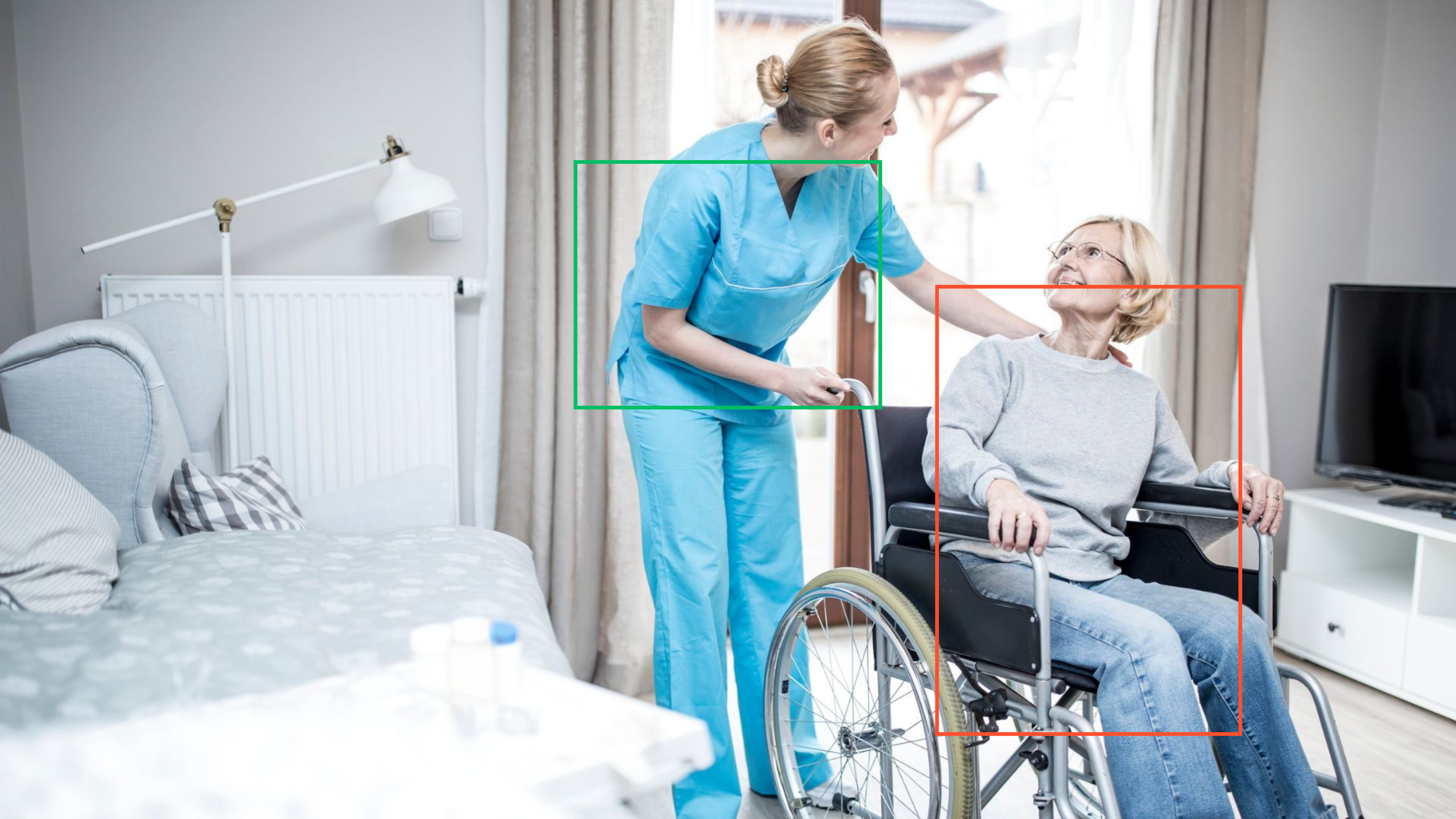
Our privacy-centric Ai sensors are placed in bedrooms or common areas capturing transition to standing from beds and chairs, sending immediate alerts to carers via handheld devices raising the opportunity for targeted intervention reducing falls and injuries.
Uniquely, 30 seconds of pre-fall footage is saved automatically following a fall event. This footage can be viewed immediately by care managers to aid in determining the level of medical intervention required, deciding route causation, preventing further incidents.
Unlike normal CCTV, only events triggering the algorithms are stored which provide valuable patient data assisting care teams to re-assess individual care plans along with identifying earlier, any underlying health issues.
From a patient’s perspective, falls diminish their quality of life, remove them from their home life for extended periods of time, creating much misery, reducing mobility and accelerating other health issues.
The adoption of artificial intelligence into falls prevention is considered a promising advancement, helping to align with the UK Governments commitment to leveraging technology in adult social care reform.
Our Aim – To improve the Patient Pathway through
the use of Assistive Technology
Fall Risk Assessment
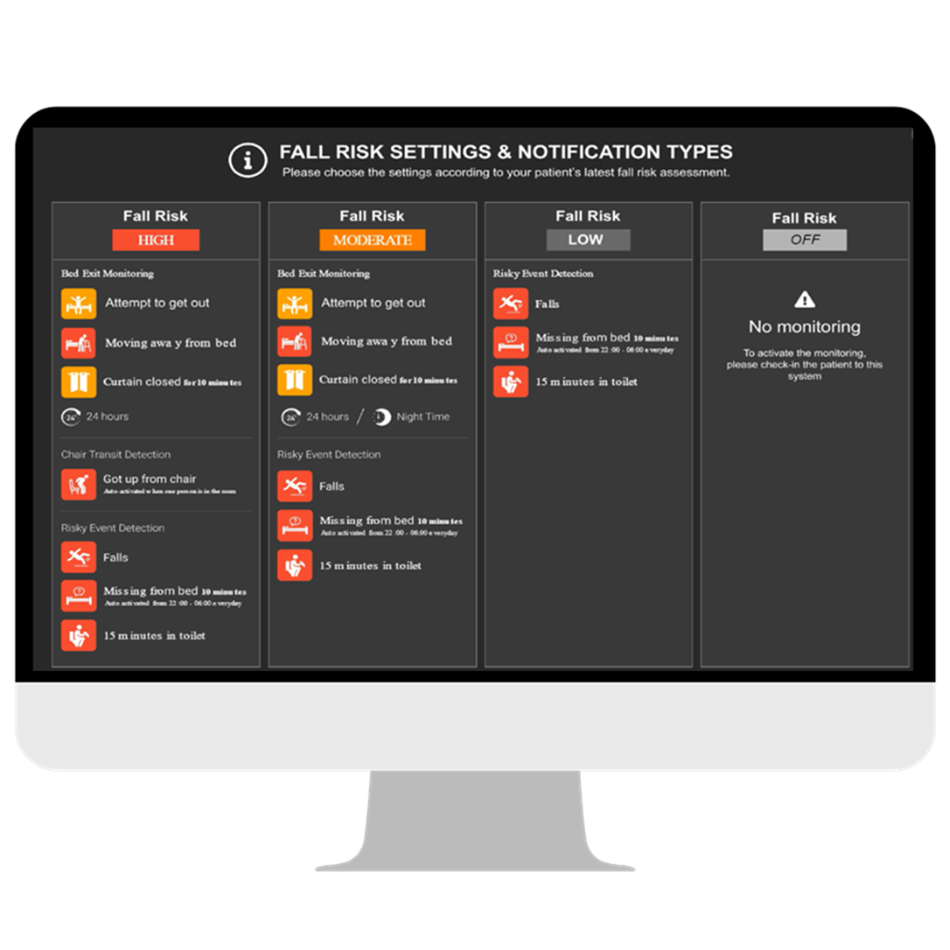
As part of the on-boarding process, an on screen fall risk assessment is completed for each patient which activates different levels of support and intervention from our algorithms creating an effective care package.
This approach enhances existing nursing practices, by creating trend analysis and data reports for continued review. This information can also be useful for sharing with family members creating an environment of trust and inclusion.
Visual Intelligence is designed to enhance a variety of settings, including hospitals, adult social care, learning disabilities and mental health environments.

Patient Data Reports
Visual Intelligence is very much a patient centred system, having been developed to provide individual data to support care teams provide a bespoke level of care.
All events are logged on the system with fall events benefitting from 30 seconds of video imagery prior to the fall allowing staff to investigate quickly and implement control measures to prevent reoccurrences.
Pressure ulcers can be serious and lead to life threatening complications. Our pressure care algorithm monitors patient movements and alerts carers to the need for turning. Interval times can be heightened where necessary to further support the patient needs.

Patient Well-Being Technology
Our suite of patient wellbeing features allow us to look after patients suffering from dementia and poor physical health.
AI technology allow us to cover the wellbeing of all patients by monitoring their movements.
The system can monitor the number of trips to the bathroom, helping in the detection of UTI’s along with alerting staff if they haven’t returned from a bathroom visit. Moving away from bed or loitering can also be detected which is particularly useful in dementia care.
Overall wellbeing is important to us all, so we continue to develop other features covering, enuresis detection, non invasive monitoring (BCG) and unauthorised bedroom visitors.
Why choose Visual Intelligence….?
When we started out designing Visual Intelligence, we recognised very early that we must place patient care and personal security at the very heart of our ethos.
Throughout the process, we engaged with registered care professionals to fully understand the needs of patients, carers, families, managers and the CQC.
This input has enabled us to design a system which is GDPR compliant. By using edge-based technology (data remains on-site) with no transfer to a cloud or data centre, and with dual permissions to access any event logs, this enables us to keep your data secure.
At the stage of on-boarding a patient, the data can by pseudonymised adding a further layer of security.
Only images covering an event are placed in the log. These images are permanently pixelated which can not be reversed.
To further ensure the privacy of patients, the system also implements strict access control permissions. Only authorised personnel are granted access to patient data, and their access is limited only to the information that is necessary for them to carry out their duties.



Contact Us
Head Office
PERA Business Park, Nottingham Rd, Melton Mowbray LE13 0PB
saul@eclipsedigital.co.uk
Phone
0370 760 5600
A WordPress.com site
 Visual Intelligence